Testing the Machine: Is "Algorithmic Pushing" Actually Real? (Part 1)
At Spinlog and 40MAG, our primary goal has always been simple: build a network that actually works for independent artists and provide brutally honest opinions. So when Chartlex claimed they could organically trigger the Spotify algorithm, we put a live track on the line to test it.
By Markus ·
Agencies asking for fifty bucks in exchange for "10,000 guaranteed streams." We all know exactly how that story ends: bot traffic, dead playlists, and a completely ruined "Fans Also Like" section.
We usually block those emails immediately. But Chartlex caught our attention because they take a radically different approach. They claim to completely bypass standard playlist pitching, focusing instead on triggering the Spotify algorithm directly through targeted ads.
We reached out to their founder, Edd, and told him exactly how we operate. We explained that our network is a non-profit passion project, that we don't care about glossy marketing copy, and that our only priority is finding transparent tools we can honestly recommend to the scene.
Instead of hiding behind PR talk, Edd replied with the kind of owner-to-owner transparency we respect. He proposed running a live test campaign to let the data speak for itself, with one strict condition:
The editorial goes live either way. If the results are mid, say that. If they're fire, say that. You said you're about transparency, so let's actually be transparent.
The Arsenal: Killing the Promo Grift
While we wait for our test campaign to launch, we took a deep dive into what Chartlex actually is. Edd, who brings 9 years of music promo experience to the table built a system that runs real Meta, YouTube, and Spotify ads to send paying listeners directly to your track.
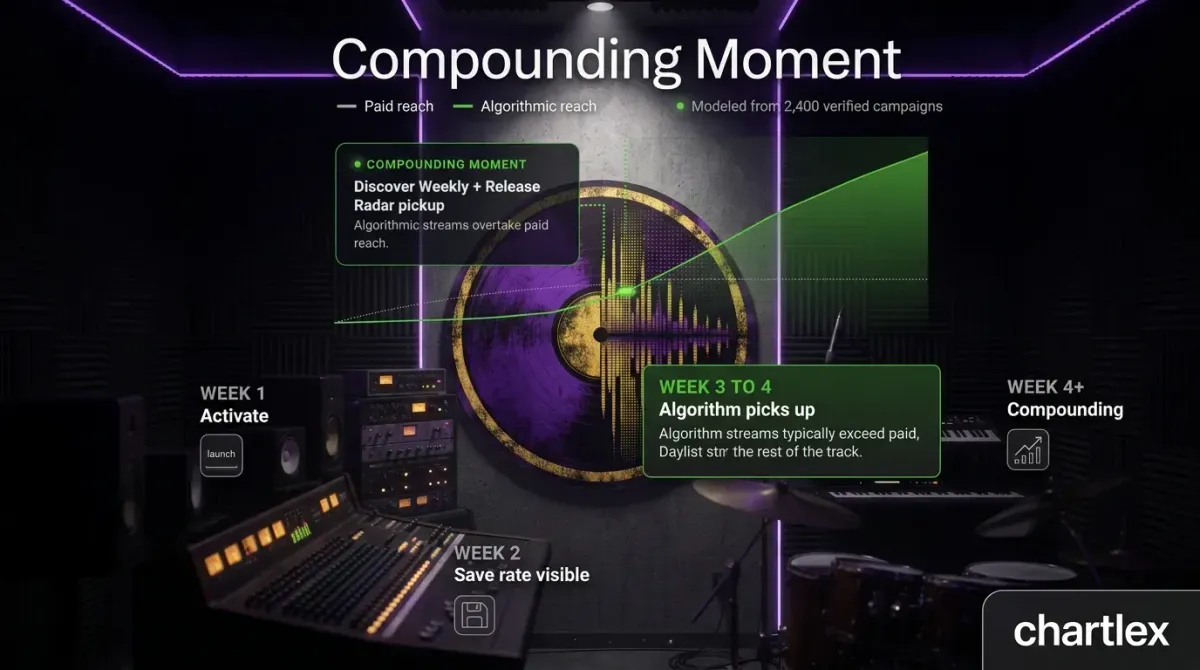
The strategy focuses on actions that actually matter to the algorithm. The campaigns optimize for listeners who save the track, add it to their personal playlists, and follow your artist profile. These organic actions signal the algorithm, pushing the track into Discover Weekly and Release Radar naturally. They back this up with a live dashboard that cross-checks every single stream against your own Spotify for Artists (S4A) data.
On top of the paid campaigns, Chartlex hosts a massive ecosystem of 24 free tools for independent artists with zero paywalls and no accounts required. A few heavy hitters include:
Artist Growth Score: A 0–100 algorithmic readiness score benchmarked against 5,000+ artists.
YouTube Channel Analyzer: A 30-second audit covering engagement and SEO.
Income & ROI Calculators: Tools to map out real streaming royalties and per-city tour profitability.
Putting The Data on the Line
Usually, we curate our recommendations by having deep, honest conversations with the founders and looking at their track record in the scene. But when a platform makes highly specific, data-driven claims about triggering the algorithm and promises a live tracking dashboard, words aren't enough. We had to see the backend for ourselves. So we set up a live test.
We handed over a specific catalog track from April: a late-night, 126 BPM UK Tech House release with a soulful, underground feel. Why this one? Because the initial release spike has completely settled, leaving it with a flat, clean baseline of around 50 streams a day. No active pitching, no mixed traffic sources - just a sleeping track. If their system relies on cheap, broad traffic, it will show immediately in the skip rates. But if their algorithm can actually wake this catalog track up, that flat baseline will provide the ultimate, indisputable hard proof for our readers.
Editorial Update (September 21, 2026)
When we kicked off this test, Chartlex and our editorial team agreed on a straightforward rule: complete transparency, regardless of the outcome.
We promised our readers honest S4A data, but unfortunately, we won't be able to provide any results for this test run. After our initial exchanges and selecting a catalog track, the campaign was never initiated on Chartlex’s end, and our follow-up check-ins went unanswered.
Because no campaign was launched, we can’t share any performance metrics, nor can we provide a recommendation or verdict on the service.
Just a quick heads-up that the hard facts and details mentioned in this article are pulled directly from official sources. As with anything in this industry, please always do your own research, form your own opinion, and see if it matches your vibe and workflow.