Beyond Subscriptions: The Ultimate Guide to Lifetime, Freemium, and Specialized Music Distributors
Tired of recurring yearly fees? Discover how one-time payments, free commission-based models, and hybrid creation platforms can change your distribution strategy.
By Markus ·
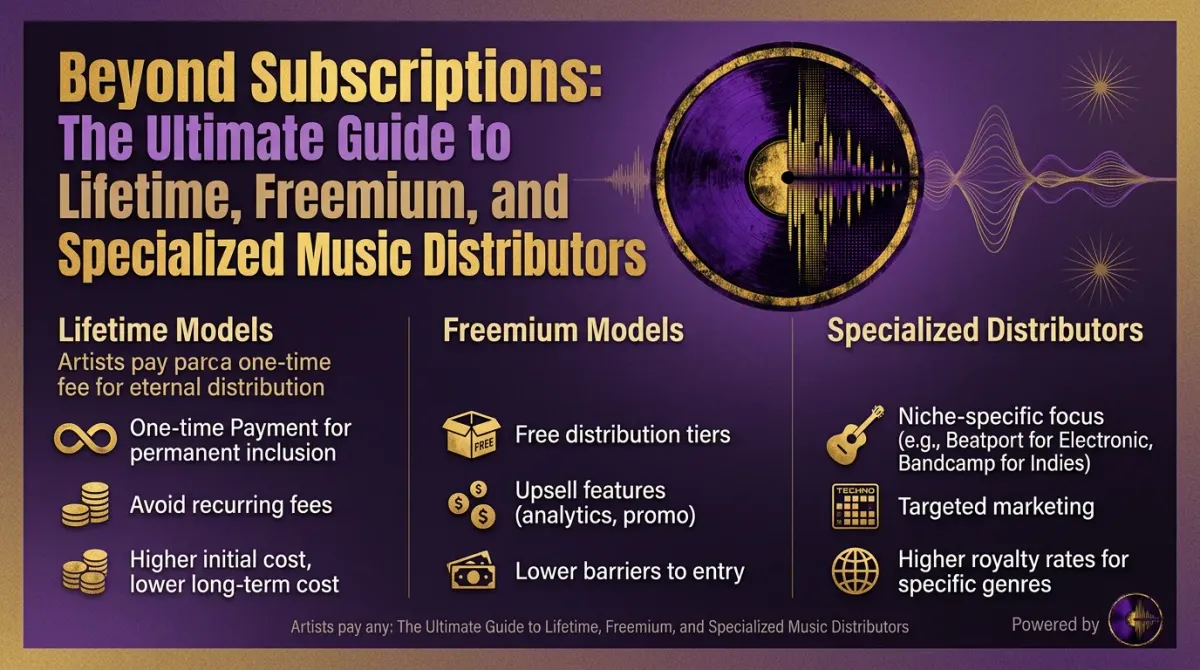
Navigating the independent music market means looking at a wide variety of business models. While many prominent services rely heavily on annual flat-rate subscriptions, alternative options exist to fit different workflows. These include one-time payment structures, commission-based free tiers, and hybrid production platforms. There is no one-size-fits-all answer to distribution, and this comprehensive overview serves as a practical guide to help you understand the diverse options available, rather than strict financial or career advice.
Missed the first half of our breakdown? If you want to see how the overall market operates or explore the popular annual subscription platforms, make sure to check out Part 1 of our music distribution overview series.
Why Look Beyond Annual Subscriptions?
Subscription models work well if you drop music constantly, but they can become a financial burden if your release schedule is more sporadic or deliberate. If you stop paying your yearly subscription, some services will pull your entire catalog off streaming networks. Alternative models are frequently favored by independent artists who release music less frequently, prefer to avoid recurring bills, or want extra built-in creative features and brand pipelines.
4. CD Baby
CD Baby is a legendary player in the music industry, known for its traditional pay-per-release structure that offers long-term catalog safety.
The Pros: The platform operates on a clear, one-time fee per single or album. This means your tracks stay online permanently without a recurring annual subscription hanging over your head. Additionally, CD Baby provides legacy options for physical distribution, like CDs and vinyl, alongside integrated sync licensing assistance.
The Cons: In exchange for keeping your music up forever without recurring fees, the platform charges a permanent 9% commission on all your streaming royalties. Furthermore, the upfront costs to launch a new release are notably higher than subscription alternatives.
5. Amuse
Amuse stands out for its app-centric design, streamlined mobile workflow, and its dual role as a distributor and a data-driven talent scout.
The Pros: Amuse features a highly accessible free distribution tier where artists can keep 100% of their royalties on basic platforms. The company monitors streaming data, meaning successful tracks can occasionally lead to direct licensing opportunities with their in-house record team.
The Cons: Payout clearing on the free tier can take up to 45 days, which slows down cash flow. Access to direct customer support is also highly limited unless you upgrade to one of their premium paid subscription tiers.
6. UnitedMasters
UnitedMasters positions its platform heavily toward modern internet culture, specific urban and indie genres, and direct commercial brand integrations.
The Pros: The platform offers unique pipelines for pitching independent music to major commercial brands, sports networks, and television sync opportunities. It also features advanced, highly visual geographic audience analytics to help target marketing campaigns.
The Cons: The entry-level free tier takes a notable 10% commission on your digital earnings. If you decide to upgrade to a premium tier to keep full royalties, it requires a more expensive annual fee than standard market options.
7. LANDR
LANDR functions as a broad creative workspace, incorporating global distribution directly into its core audio mastering and collaboration software.
The Pros: It seamlessly combines AI-powered audio mastering, secure cloud storage, remote collaboration tools, and worldwide distribution into a single workspace ecosystem for producers.
The Cons: The pricing and comprehensive technical toolset are often excessive for indie artists who only need simple file distribution. Additionally, their lower-level entry tiers still involve royalty commission fees.
Market Overview Matrix
To help visualize how the major players compare, this reference matrix breaks down the payment types, royalty structures, and general market fits across both subscription and alternative models:
Distributor | Main Pricing Type | Royalty Commission | General Market Fit |
|---|---|---|---|
DistroKid | Annual Subscription | 0% | High-volume creators needing quick delivery |
Ditto Music | Annual Subscription | 0% | Artists wanting flat costs without extra add-ons |
TuneCore | Hybrid Subscription/Per-Track | 0% (Paid Tiers) | Artists focusing on publishing and analytics |
CD Baby | One-Time Fee Per Release | 9% | Occasional releases and physical catalog safety |
Amuse | Freemium Model | 0% (Free Tier) | Budget-conscious beginners managing via mobile |
UnitedMasters | Freemium Model | 10% (Free Tier) | Creators looking for brand partnerships and syncs |
LANDR | Combined Software Suite | 0% (Paid Tiers) | Producers looking to merge mastering with distribution |
Final Thoughts
Every distribution model has its own hidden complexities, and the right path depends entirely on your personal release frequency, budget, and long-term career goals. High-output creators often find immediate value in flat-rate subscription models, while those focused on occasional, high-concept releases might find safety and peace of mind in lifetime structures.
Ultimately, distribution is simply the technical pipe to get your music onto streaming servers. The actual growth, engagement, and longevity of your project relies heavily on your own independent marketing efforts, unique branding, and authentic community-building.